
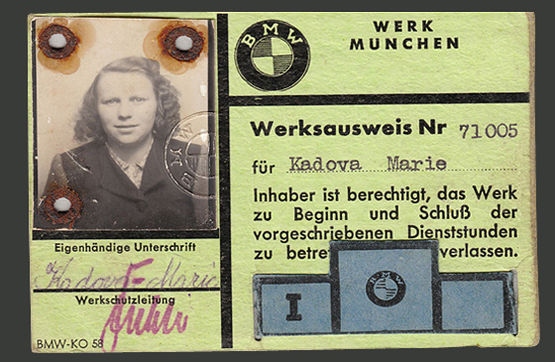
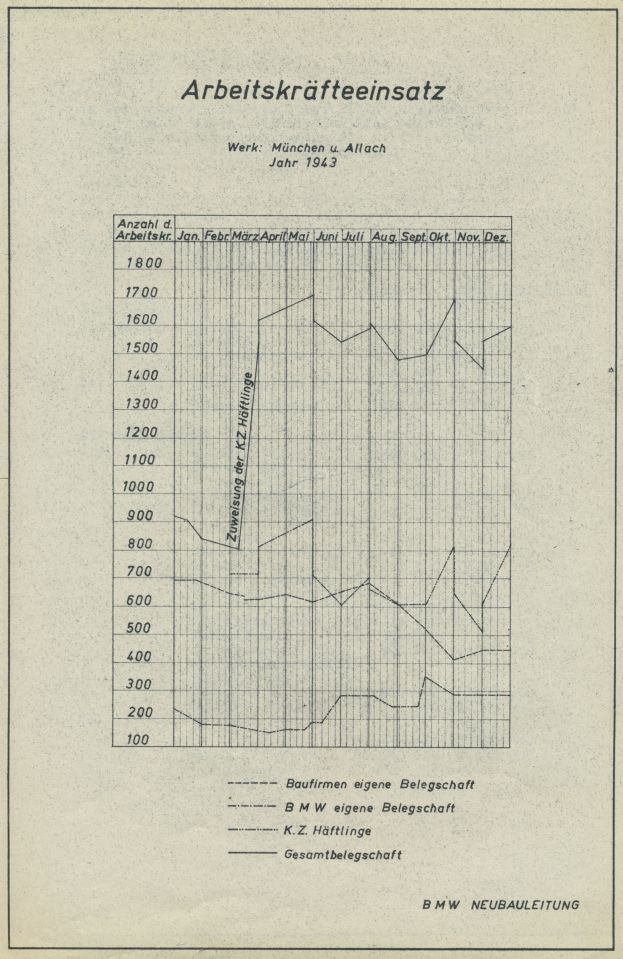
Number of workers at BMW Munich, 1943.
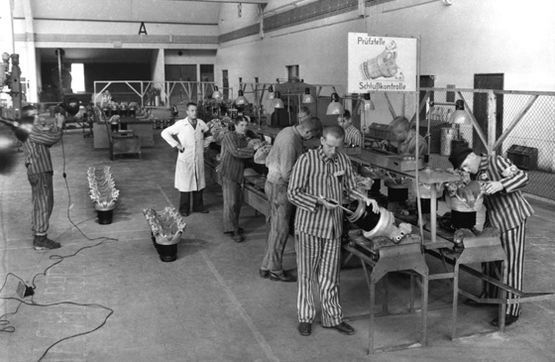
Beginning in March 1943, BMW brought prisoners from the Dachau Concentration Camp to work on the construction sites in Munich. Later inmates were also put to work in manufacturing. They were housed in the Allach subcamp.
Source: BMW Group Archiv
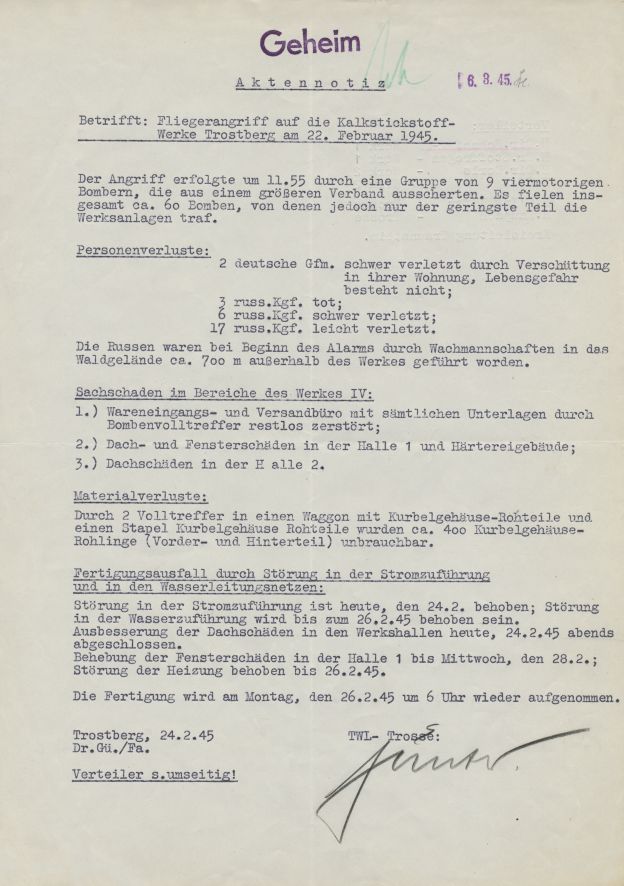
Report on a bombing raid, February 1945.
Eastern European forced laborers were not permitted in air raid shelters. During the bombing of the BMW facility in Trostberg, the Soviet prisoners of war were brought into the forest, where three of them died.
Source: BMW Group Archiv
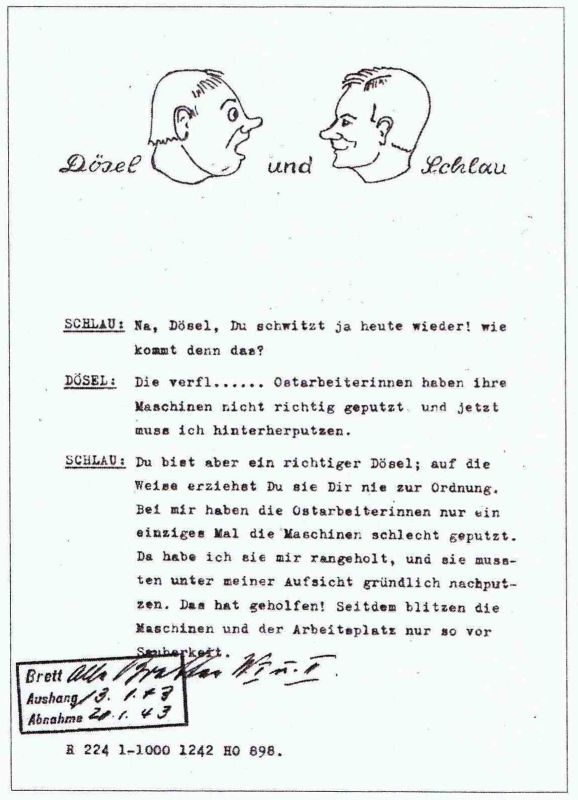
Notice posted at the Anker factory, 1943.
The Anker factory in Bielefeld posted instructions on the treatment of foreign workers on their facility’s bulletin board. The German worker nicknamed “Smart” is harsh in his treatment of the female Soviet forced laborers.
Source: Stadtarchiv Bielefeld
More on the subject
Minsk: German Firms in Occupied Eastern Europe (section of the exhibition)
Munich-Allach: Working for BMW
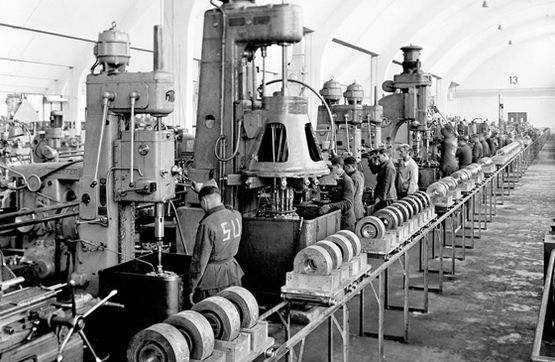
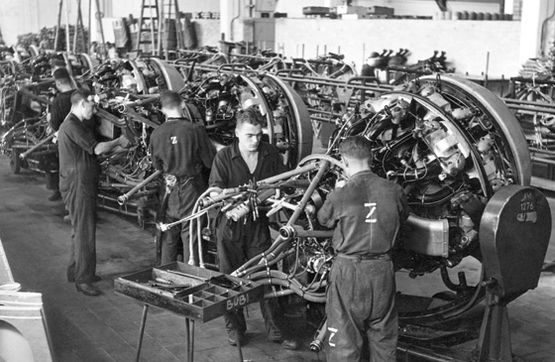
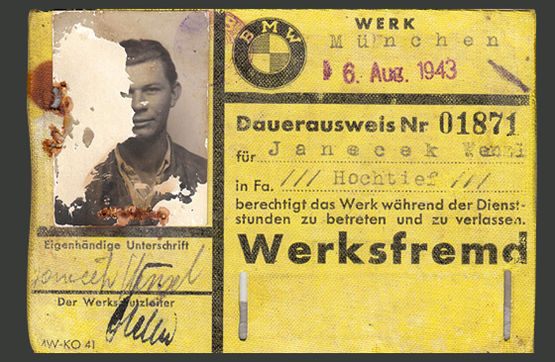
Toward the end of the war ninety percent of the workforce at the largest aircraft engine factory in the German Reich – BMW’s plant in Munich-Allach – consisted of foreign civilian workers, POWs and concentration camp inmates. The number of workers had risen from 1,000 in 1939 to more than 17,000 in 1944.
Forced laborers worked not only in the assembly halls, but also on the factory’s expansion. Due to BMW’s importance to the armament industry, the authorities gave it priority over other companies in the assignment of workers. Nevertheless, its personnel demand was never completely met.
Some of the Western European workers lived in private quarters. For all others, barrack camps were set up all around the factory grounds until 1944, ultimately accommodating 14,000 people. That figure included several thousand concentration camp inmates which the company management had applied for already in 1942.
 |
Forced Labor in the Reich until the End of 1941
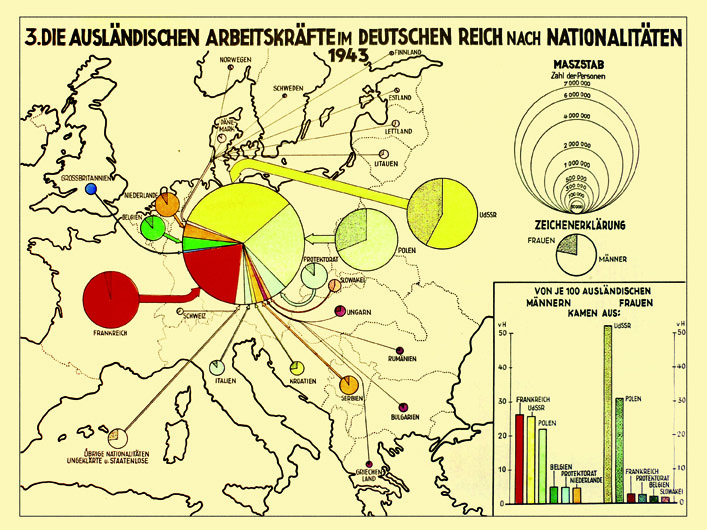
Polish civilians and prisoners of war were already being put to work in German agriculture as early as the autumn of 1939. The German authorities initially proceeded on the assumption of a short-term arrangement. As the war expanded, however, so did the demand for workers. Beginning in 1940, French prisoners of war – and the following year Serbs – were deployed for forced labor in the Reich.
In order to keep these foreigners away from the German population, the authorities passed repressive residence and employment regulations applying to the prisoners of war and Polish civilian workers. These included the “Polenerlasse”(“Pole decrees”) of February 1940, which introduced early on certain key regulations that were further tightened in 1942 in the “Ostarbeitererlasse” (“Eastern workers decrees”).
Audio
Jacques Leperc about his illness and exhaustion.
Written reminiscences, ca. 2000 (voice over, 02:00 min.)
Source: Foundation “Remembrance, Responsibility and Future”